12 Vegetables You Can Regrow From Kitchen Scraps
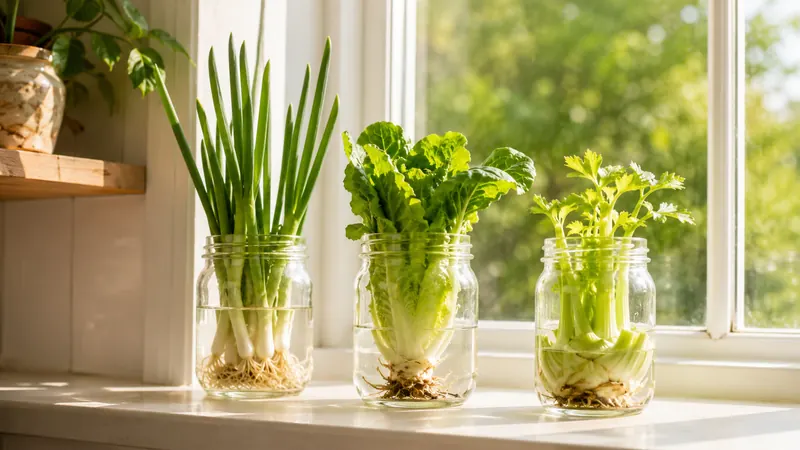
Every time you toss a green onion root, a lettuce heart, or a celery base, you're throwing away free food. These 12 vegetables regrow from scraps you already have — no garden, no soil, no special equipment. Most of them only need a jar of water and a windowsill.
💡 How this works
When you cut certain vegetables, the base, root, or clove still has living cells that can regenerate. By putting them in water or soil, you trigger regrowth. Some produce full harvests in under a week.
Water Method (No Soil Needed)
These grow right on your kitchen counter in a glass of water. Change the water every 2-3 days to prevent slime.
Green Onions / Scallions
Cut the green onion 1–2 inches above the white root end. Place the root end in a small glass with half an inch of water. Set it on a windowsill. New green shoots appear within 2 days and you can harvest in under a week. You can repeat this 3–4 times from the same root before it weakens. This is the single most satisfying regrow — it's almost instant.
Romaine Lettuce
Cut the romaine about 2 inches from the base. Place the base in a shallow bowl with half an inch of water. New leaves sprout from the center within a few days. After 10–14 days you'll have enough for a small salad. The regrown head will be smaller than the original but perfectly edible. Transfer to soil for a bigger harvest.
Bok Choy
Same method as romaine. Cut 2 inches from the base, place in water, watch it regrow. Bok choy tends to regrow faster and fuller than lettuce. Transfer to soil after a week for best results.
Celery
Cut the base 2 inches from the bottom. Place in a shallow bowl of water. Small yellow-green leaves appear from the center within a week. Once you see roots forming underneath, transplant to soil (a pot or garden bed). The stalks will be thinner than store-bought but the flavor is the same.
Basil
Take a 4-inch cutting from a basil stem, just below a leaf node. Remove the lower leaves and place in a glass of water so the node is submerged. Roots appear in 7–14 days. Once roots are an inch long, transplant to soil. One $3 bunch of basil from the grocery store can give you an unlimited basil supply forever.
Lemongrass
Place the root end of a lemongrass stalk in a glass of water. Change water every few days. Roots sprout within 2–3 weeks, and new green growth appears from the top. Transfer to a pot of soil. Lemongrass grows aggressively — one stalk can become a full clump in a single growing season.
Soil Method
These need dirt to regrow, but you don't need a garden — a pot on a patio or a container on a fire escape works fine.
Garlic
Plant a single garlic clove pointy-end up, 2 inches deep in soil. Water occasionally. Each clove grows into a full bulb with 8–12 new cloves. Plant in fall, harvest the following summer. In the meantime, the green garlic shoots that sprout are edible and delicious — use them like chives.
Ginger
Cut a piece of fresh ginger root with visible "eyes" (growth buds). Let it dry overnight, then plant 1 inch deep in moist soil with the eyes pointing up. Keep warm and moist. Ginger grows slowly but reliably. Harvest after 3–4 months by pulling up the whole plant or breaking off pieces as needed.
Potatoes & Sweet Potatoes
Got a potato sprouting eyes in your pantry? Don't throw it out. Cut it into pieces with at least 2 eyes each, let them dry for a day, then plant 4 inches deep in soil. Each piece grows into a full plant that produces 5–10 new potatoes. For sweet potatoes, suspend a sweet potato half in water using toothpicks until slips (green shoots) appear, then plant the slips in soil.
Carrot Tops (Greens, Not Roots)
A carrot top won't regrow a full carrot — but it will grow carrot greens, which are edible and taste like parsley. Place the cut top in a shallow dish of water. Greens sprout within a week. Use them in salads, pesto, or chimichurri. Same works for beet tops and turnip tops.
Beet Tops (Greens)
Same technique as carrot tops. Cut an inch off the top of a beet, place in water, and new greens emerge within days. Beet greens are nutritious — high in iron and vitamin A. Sauté them like spinach or add raw to salads.
Pineapple Top
This is a long game but a fun one. Twist the leafy crown off a pineapple, let it dry for a few days, then plant in soil. It grows into a handsome houseplant and, if you're patient, produces a full pineapple in 2–3 years. Needs bright light and occasional watering. Even if you never get fruit, it's a beautiful free plant.
🌱 The "good enough" note
You don't need to regrow all 12. Start with green onions — they're the fastest, easiest win and they're satisfying as hell to watch grow. Once you've done that, try lettuce or celery. Each one is food you didn't have to buy and packaging you didn't have to throw away.